

Discover the Healing Power of Art Therapy with Toys, Drawings, and Creative Expression

Sometimes the feelings that matter most are the hardest ones to say out loud. A child might not have the words yet. A teen might shut down the second a conversation feels too direct. An adult might know exactly what happened but still feel stuck when trying to explain it.
That’s where art therapy can be so helpful.
Art therapy uses creative tools like drawing, painting, clay, collage, and symbolic play to help people explore emotions in a safe, supported way. It’s not about being “good at art.” It’s about using creativity as another language, especially when regular conversation feels too heavy, confusing, or overwhelming.
What art therapy really looks like
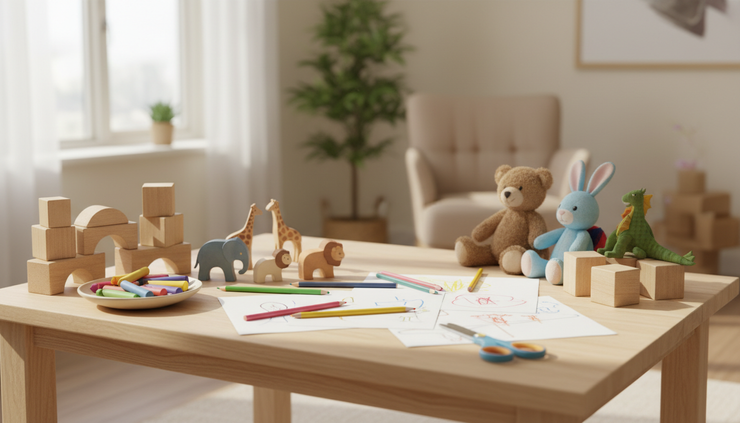
Art therapy can look different from person to person. One session might involve drawing a safe place. Another might use toy animals to show family roles or friendships. Someone else might paint shapes and colors that match how their anxiety feels.
A trained art therapist or mental health professional guides the process. They don’t grade the artwork or judge whether it looks “right.” Instead, they help connect the creative work to feelings, memories, choices, and patterns.
A session may include:
Drawing or painting emotions
Making collages from images and words
Using clay to shape a feeling or experience
Creating a visual timeline
Playing with toys, figures, or miniatures to tell a story
Using color, line, and texture to express stress or calm
The creative piece becomes something to look at together. That little bit of distance can make hard topics feel more manageable.
Why toys and drawings can open the door
Toys and drawings are especially useful because they lower the pressure. Instead of asking, “How do you feel?” a therapist might invite someone to pick a toy that represents them today. Or draw what a hard day looks like. Or build a scene that shows what feels safe and what feels scary.
That can be powerful.
For kids, toys often feel natural. Play is already how many children process the world. A toy house, a dragon, a stuffed bear, or a tiny fence can say a lot without forcing a child to explain everything in adult language.
For teens and adults, drawing can create a similar bridge. A person might sketch a wall, a storm cloud, a tangled line, or a small island. Those images can make emotions easier to notice and talk about.
The goal isn’t a perfect picture. The goal is honest expression.

The emotional benefits of art therapy
Art therapy can support emotional healing in several ways. It gives people a safe outlet, which can matter a lot when feelings are intense or hard to name.
Here are a few benefits many people find helpful.
It helps make emotions easier to understand
Big feelings can feel messy inside the body. Art gives them a shape, color, or story. Once something is on paper or built with toys, it can feel less invisible and less overwhelming.
Someone might realize their anger looks like red scribbles, their sadness feels like gray rain, or their stress looks like an overstuffed backpack. That awareness can be a first step toward coping.
It can reduce stress in the moment
Creative activity can be calming. Repeating lines, pressing clay, choosing colors, or arranging objects can help the body slow down. For many people, making art creates a steady rhythm that supports relaxation.
This doesn’t mean art therapy magically removes stress. But it can help the nervous system settle enough to talk, reflect, or simply breathe.
It gives people more control over their story
When someone has been through something painful, they may feel like the experience controls the whole narrative. Art therapy can help them tell the story at their own pace.
They can choose what to show, what to hide, what to change, and what to revisit later. That choice matters. Healing often feels safer when people don’t feel rushed.
It supports communication without pressure
Not everyone processes feelings by talking first. Some people need to draw, move, build, or create before the words come.
Art therapy respects that. It gives another way in.

Who can benefit from art therapy
Art therapy can support children, teens, and adults. It may be used alongside talk therapy, family therapy, trauma-informed care, grief counseling, or anxiety support.
It can be helpful for people working through:
Anxiety or stress
Grief and loss
Trauma or difficult memories
Family changes
Depression
Low self-esteem
Emotional outbursts
Social struggles
Life transitions
For younger children, art and play can make therapy feel less intimidating. For teens, it can offer privacy and expression without forcing a full explanation right away. For adults, it can uncover thoughts and feelings that have been hard to access through words alone.
If you’ve searched for support and typed something like “therapy near me,” it may be worth asking whether the provider offers creative or expressive therapy options. And if you’re looking specifically for art therapy Sacramento services, ask about the therapist’s training, approach, and experience with your concern.
What to expect in a session
A first session usually starts gently. The therapist may ask about goals, current challenges, history, and what kind of creative activities feel comfortable. No one should be forced to make art in a way that feels embarrassing or unsafe.
The therapist might offer a prompt, such as:
Draw a place where you feel calm
Choose a toy that shows how today feels
Use colors to show what stress feels like in your body
Make an image of something you want more of in your life
After the creative part, there may be time to talk about what came up. The therapist might ask what certain colors, shapes, or objects mean to the person who made them. The meaning comes from the creator, not from a one-size-fits-all interpretation.
This kind of therapy is informationally described here and isn’t a substitute for personalized mental health care. If someone is in immediate danger or crisis, they should contact emergency services or a local crisis line right away.

Taking the first step toward creative healing
Art therapy gives feelings somewhere to go. A drawing can hold fear. A toy scene can tell a story. A lump of clay can carry tension for a little while. From there, healing can start to feel less abstract and more possible.
If creative expression sounds like a gentle way to begin or continue therapy, reach out and ask what support might fit best. You can contact HCC Counseling to learn more or schedule a conversation.


Comments